Saturday, 21 April 2012

Market Madness or What do Vegans Eat? April 21


Welcome to my new weekly section of Spinach, wherein I finally master the art of quick and breezy posts by showing off my weekly farmer's market haul, and bragging about what I made for dinner every week.  Fun, yes?

What we bought this week:  One head of cauliflower, 4 large white onions, one bag of white potatoes, one bowl of jerusalem artichokes (sunchokes), one head of purple cabbage, one swede, one butternut squash

Cost: £5.30

These humble ingredients turned into:

Butternut Squash Thai Curry with Coconut Brown Rice
(own recipe)

Jerusalem Artichoke Soup
(own recipe)


 Pureed Swede and Potatoes with Carmelized Onions
(own recipe)

Tibetan-style Seitan Burritos
(Moosewood Celebrates)

Cauliflower and Mushroom Pot Pie
(Vegonomicon)

Tuesday, 17 April 2012

Hard, Cold-Pressed Truths: the Problem with Olive Oil

I'm going to tell you all something, and I would like you to remain calm and not throw things at your computer screen.  Olive oil is not health food.  You don't need it in your diet.  It's not really that good for you.

Are you still reading?  Have you closed the window and walked away?  I can feel you glaring these words as you read them.  It's okay, I felt the same way you do.  What I'm saying goes against every magazine article, every sloppy evening news story, every piece of Mediterranean ancient wisdom that you've encountered in the last 10 or 15 years.

Usually the magazine articles go something like this: "Studies have discovered that olives/sunflower seeds/walnuts/avocados contain large amounts of healthy, good fatty acids, which have been associated with a reduced risk of heart disearse and a reduction in  LDL cholesterol.  We recommend adding a few tablespoons of olive/sunflower/walnut/avocado oil to your daily diet to gain these benefits.  Keep in mind that olive oil is high in calories, so don't eat too much of it!"

Well, what's wrong with that?  The science is accurate, studies really have found those things to be true about olives, sunflower seeds, walnuts, and avocados.  But there is a leap of logic here.  And it's the same leap of logic that causes people to read stories about the health benefits of cacao beans, and then go delve into a box of Godiva chocolates, believing that they're doing something good for their health.  The problem (and solution) with fats is the form in which we eat them.

Olives, nuts, seeds, and avocados are full of healthy mono and polyunsaturated fats, fiber, protein, vitamins, minerals, and antioxidants.  As Dr. Joel Fuhrman says, they have nature's protective packaging with them.  Whole, plant-based fats are necessary for our diets.  They provide nutrients, essential fatty acids, and they make us feel full and satisfied.  The problem with oils is that they aren't whole fats.  Oil is a processed product.  Olive trees exist.  Olive oil trees do not.  Olives whole.  Olive oil processed.

But is there really always a problem with eating processed food?  Are there actually specific health problems with consuming oils? Well, different oils pose different problems, but they all share the common problem of being very high in calories and very low in nutrients.  This means that oils take up space in your diet that could be used for foods that contain healthy fats along with a plethora of nutrients.  They are essentially junk food.  One tablespoon of olive oil contains about 120 calories, and little in the way of nutrients.  You would need almost a cup of olives to get up to the same amount of calories, and along with it you would be getting fiber, beta carotene, vitamin E, calcium, iron and more.  As we're focussing on olive oil, it's worth mentioning that at least one study has found that meals rich in olive oil impair the dialation of arteries after said meal, a problem which can contribute to heart disease. 

So why has olive oil got such a good reputation?  Well, for one thing, there are health benefits that arise from switching from saturated or trans fat to olive or canola oil.  That shouldn't come as any shock.  But this means replacing butter or lard or hydrogenated oils with an equal amount of olive oil, and ensuring that you aren't consuming any more calories in the process.  It does not mean dipping cheese laden white bread into olive oil and claiming that you're now European.

Now, I can hear you thinking, that plenty of cultures have consumed plenty of olive oil for plenty of years, and these cultures tend to have much lower rates of heart disease and other "diseases of civilisation" than other countries.  Which is true.  A little.  Much has been made of the health benefits of the Mediterranean diet, without anyone stopping to question which of 20 plus countries with different diets we're talking about, and we've generally interpreted these health benefits to mean that we should add olive oil, fancy cheese, and red wine to our diets without altering anything else.  C'mon.  The thing is, the reason that some traditional (note the word traditional, not necessarily current) Mediterranean diets are good for you isn't because of single ingredients like wine or oils.  The diets that have shone in research have been rich in veggies, fruits, beans and other legumes, and whole grains.  The people eating these diets also walked about 9 miles a day.  So a little wine and olive oil wasn't going to hurt them. 

So, what does this mean in practical terms?  Do I avoid oil in my own diet?

I love olive oil.  I cook with it all the time.  But I've definitely changed my own cooking practices since learning more about its inflated health reputation.  For general, everyday use, I've limited the amount of oil I use to one tablespoon per dish (not portion), and I usually use less than that, actually.  When I've been able to remove the oil without compromising the taste or texture of my dish, I have.  I've also had a lot of success in cooking in just a little bit of oil, and some water.  But I do fry in lots of oil, once in a blue moon, because it just makes life happier.  And for a special meal, I use as much oil as I please.

And for you?  Well, this information is most vital to those who are undergoing serious health issues related to heart problems or obesity.  For those people, I wouldn't consume more than one teaspoon a day.  And if you are someone who eats a generally healthy diet based on wholefoods and is fairly active but you can't seem to lose weight (assuming your goal isn't unrealistic or unhealthy), you might want to try limiting or cutting out oil.  Try cooking in water or even a little vegetable stock instead.  For salad dressings, try nut butters or tahini, or pureed nuts instead of oils.  You'll be getting more nutrition, fewer calories, and more taste.

Resources:
Fuhrman, Joel, MD, Eat to Live, Little, Brown and Company, 2011.
Fuhrman, Talia, "It's About Time the Olive Oil Myth was Laid to Rest", Diseaseproof.com, 2012
"The Truth About Olive Oil", Pritikin.com, 2012

Vital Vittles


Super Simple Beet Soup with Cashew Cream

I find that soup is particularly good for oil-free cooking.  As the title suggests, this is a very fuss-free soup that looks as nice as it tastes.  The cashew cream is a vegan substitute for sour cream.  It doesn't really taste that much like sour cream, but it's still delicious, and adds some nice whole fat into our oil free soup.  I would serve this soup with a bean or lentil salad, or some nice dark rye or pumpernickel bread.


1 onion, chopped
1 beetroot, peeled and cut into 1" pieces
1 potato, peeled and cut into 1" pieces
1 tart apple (granny smith or cox), peeled and cut into 1" pieces
4-5 cups of veggie stock, or water with two stock cubes
salt and pepper to taste

3/4 cup raw cashews
2 tbsp lemon juice
1/4 cup water
salt to taste

Peel and chop the vegetables and apple and chuck them into a soup pot.  Put enough water or stock in to cover the vegetables and simmer until the beetroot pieces easily with a fork about 20-30 minutes.  Add the remaining stock/water and stock cubes and heat until simmering.  Take off the heat and blend with a hand-held blender until completely smooth.  Season to taste.

Add the cashews, lemon juice and water into a blender (if you only have an immersion or handheld blender, just use a tall container).  Blend until creamy, adding water if necessary. Salt to taste.

Serve into bowls and add a spoonful of cashew cream to each bowl, and swirl it around to make it pretty as you please.

Sunday, 11 December 2011

Ho-ho-herbivore! A Guide to Vegan Christmas Shopping

Got a vegan in the family?  Did your teenager "go crazy" and start wearing hemp shoes and throwing your chicken pot pie out the window?  Are you a new vegan and you're feeling lost and adrift in a cold, meaty world?  Are you a vegan and you want to spread the green word without bashing people on the head with your soapbox?  Here are a few ideas for gifts for vegans, animal rights activists, people on the fence, and people who won't stop badgering you about what you eat and you would rather a book or a DVD answered their questions for you.  This list is made up mostly of books, but if your vegan refuses to read, just buy them a good chef's knife.  Watching my friends try to cut up carrots with a 2 inch paring knife is a deeply painful experience.

General Vegan Guides

The 30 Day Vegan Challenge, by Colleen Patrick Goudreau

If you, or anyone you know, is thinking about becoming vegan but you have some questions about how you would accomplish such a feat, this is the book for you.  Vegan activist Colleen Patrick Goudreau (you've read my raves about her marvellous podcast, Vegetarian Food for Thought) expertly lays out 30 days full of information about food, health, social situations, and practical matters such as how to stock a vegan kitchen, how to bake without eggs, and getting the right nutrients. A perfect book for anyone, man/woman, intellectual/practicalist/granola cruncher, who is interested in veganism.

The Kind Diet, by Alicia Silverstone

If vegan activists were sitting around waiting for a poster girl to champion their cause, they couldn't have asked for better than sweet, enthusiastic, and beautiful Alicia Silverstone and her gentle, occasionally slightly silly, but inspiring introduction to veganism.  Coming from a semi-macrobiotic point of view, Alicia lays bare the ethical, environmental, and health reasons for veganism.  She offers practical advice on making the change, allowing room for both people who want to "flirt" with a vegan diet and people who want to jump right in and eat a wholefoods vegan diet.  She also includes a fair amount of recipes, some of which contain fairly unfamiliar, and sometimes pricey ingredients, but many of which are very simple and surprisingly delicious.  A good, very unintimidating book for women.

Skinny Bitch, by Rory Freedman and Kim Barnouin

While some people find the irreverant and frequently profane tone of this book a little off-putting, I have to admit that I think Rory Freedman and Kim Barnouin are kind of geniuses.  When you pull the book off the shelf, it reads as just another diet book, but it is actually a thorough explanation of the horrors of the animal agriculture industry and a sensible guide to wholefoods eating.  Rory Freedman has point blank admited that the snappy title was simply a marketing ploy, saying "I am well aware that in this day and age, in this society, people care more about their appearance than they do about almost anything else. It’s sad that that’s the case. I wrote the book so that women who only cared about how they look would learn about what they were contributing to in terms of animal torture, how they were poisoning their own bodies, and how being skinny is bullshit meaninglessness."  I can't express to you how much I f***ing love that. Another good book for women, but there is also a counterpart, Skinny Bastard, which is aimed at men.

Ethical

Eating Animals, by Jonathan Safron Foer

Fiction writer Jonathan Safron Foer had a baby, and then decided that he had to feed that baby.  This thought process led him to investigate the conditions of farm animals raised in the modern agricultural system.  And THIS process led to him becoming vegan.  Eating Animals is personal, creatively written, and pretty devasting.  The book wanders through personal experience, story-telling, and overwhelming factual information.  Safron Foer remains free of judgement of the reader's choices, fairly representing multiple perspectives on the subject of animal industry, and never pushing his point.  A good volume for the philosophically inclined or those on the fence who can't handle more dogmatic, black and white reasoning.

Stuff I haven't read:

Professor Gary Francione's Books

Gary Francione is the father of the abolitionist approach in animal activism, meaning he is opposed to welfare reforms in the industry, and instead focuses his time on vegan outreach and education, in an attempt to abolish animal use in our society.  I follow his podcast avidly, but haven't read any of his books yet.  Rain Without Thunder is the standard.

Earthlings, directed by Shaun Monson

I haven't watched this documentary, and I have no intention of watching it in the future.  But that doesn't mean I don't think YOU should.  This documentary, narrated by vegan actor Joaquin Pheonix, is reputedly incredibly full-on, examining animal abuse in our society without skimping on the graphics.  People walk out of the movie theatre and become vegan instantly.

Health

The Great American Detox Diet, by Alex Jamieson

I really like this simple little guide to healthy eating, written by the wife of Supersize Me's Morgan Spurlock.  Based on the diet she put Morgan on after his month of McGrease, Jamieson enthusiastically lays out 8 weeks of cutting out dietary nasties, including caffeine, sugar, animal, protein, trans fats, and simple carbs.  The book also contains a final section of several recipes, and most of these that I've tried have been pretty yummy. This book is a good introduction for anyone who is just starting to show a burgeoning interest in a healthy diet.

The China Study, by T. Colin Campbell

Everyone needs to read this book.  Now.  Read this book and understand cancer growth better, just how very much our diet affects our chances of getting cancer, heart problems, and autoimmune diseases, and how collosally, infuriatingly corrupt the American Food Standards Agency is in deciding what information and regulations make it to the public.  Respected Cornell medical researcher T Colin Campbell has spent his long career examing the relationship between the standard Western diet and disease and a wholefoods, plant-based diet and good health, and he chronicles many years of findings in this book.  Some animal activists object to the book on the grounds that some of Campbell's earliest work involved experiments on animals.  Of course I don't approve of these methods, but I think that to ignore such a compelling and important work is simply shortsighted.  Like I said, this book is a good idea for everyone.  EVERYONE.

Also see:  Forks Over Knives, directed by Lee Fulkerson

This documentary is pretty much a summary and film version of The China Study, and talks about the work of Campbell, Dr. Carl Esseylstyn, and Dr. John Mcdougall.  The movie also includes interviews with several people who were on death's door, and have used a plant-based diet to turn their lives around become healthy, active people at an older age.  And some of them are just so...adorable!  A great introduction to the ideas in The China Study.

Stuff I haven't read:

Becoming Vegan, by Brenda Davis and Vesanto Melina

I feel a little silly admitting that I haven't actually read this book, but this is the quintessential guide to the nutritional considerations of turning vegan.


Cookbooks

Veganomicon, by Isa Chandra Moskowitz and Terry Hope Romano

Isa Chandra Moskowitz and Terry Hope Romano are the quirky, creative kitchen goddesses of Veganworld, and this all-purpose cookbook will stand on the shelves of all vegans for years to come.  The book includes a comprehensive guide to stocking your kitchen and  instructions for how to cook various vegetables, grains, and beans.  The recipes are amazingly creative and delicious, with options such as potato and kale enchiladas, mole skillet pie, and jelly donut cupcakes.  The only drawback to the book is that a lot of the recipes are very time consuming, and I would pay close attention of the time guidelines before you decide to make one of the dishes for a weeknight dinner.  A good book for any vegan or vegetarian, or anyone who is truly interested in the endless possibilities of their kitchen.

The Vegan Table, by Colleen Patrick-Goudreau

The second entry on this list for a Colleen Patrick-Goudreau book, this cookbook focuses on holiday and entertaining meals for the vegan table.  Ironically, most of the receipes in this book are less complicated and quicker than the recipes in Veganomicon.  This book is peppered with bits of cooking tips, foodie knowledge, entertaining ideas, and advice for the social challenges of eating as a vegan.  The recipes are nearly all winners, including macaroni and cashew cheese, carmelized tempeh shwarmas, and FRUIT SUSHI.  Patrick-Goudreau uses mostly familar, easy to find ingredients, and thoroughly explains any unfamilar ingredients.  An all around good book for those new to the diet, or those who love to entertain. 

Moosewood Cooks at Home, by the Moosewood Collective

Some may find the inclusion of the Moosewood cookbooks on this list to be controversial: they aren't vegan, or even technically vegetarian, a small amount of the recipes include fish, but my formative culinary years were shaped by the Moosewood Collective, and this cookbook is such a great introduction to vegetarian cooking. Many of the dishes are vegan, and quite a few can be easily veganised (although a few are centred around eggs, dairy, and fish).  The cookbook is fantastic for weekdays, full of simple, uncomplicated recipes with mostly familiar ingredients that you can find in any ol' grocery store.   Some of the recipes I've already featured on this blog, but other favourites of mine include the African peanut and pineapple stew, bulger burgers, cajun skillet beans, and pan bagnet (a pressed, garlicky baguette sandwich).  A great cookbook for those just starting out in the kitchen.

Moosewood Celebrates, by the Moosewood Collective

I love this cookbook!  We're focussing on entertaining and celebrating again here, and reading this book will make you want to cook (and eat).  Divided into season and then into different holidays, each seasonal introduction will get you excited about seasonal cooking, and each description of each holiday will make you want to entertain, travel, and learn more about world food.  The various holidays include familiar Western ones, as well as, also Diwali, Chinese New Year, Tibetain-American Losar Dinner, Juneteenth, and Setsubun (Japanese Bean Day).  I have many favourite recipes from this book, some of which are greens and cashew curry, Indian potato pancakes, potato latkes, Tibetan style seitan burritos,  and vegetable pot pie (this one isn't vegan, but I'm determined to figure out how to veganize it).  Again, a few (very few) recipes have fish in them, although several of those recipes include a vegetarian option.  Vegan recipes are helpfully indexed in the back, and plenty of the LO veggie recipes are easily veganized.  A great book for any cook, but especially those looking to expand their horizons.


Vegan Cupcakes Take Over the World, by Isa Chandra Moskowitz and Terry Hope Romero

We're back with Isa Chandra Moskowitz and Terry Hope Romero, and this adorable little book is as cute as cupcakes themselves.  This book includes many delicious and creative recipes, most of which use ingredients omnivore bakers will have on their shelves (agave nectar makes only the briefest appearance in this book*).  The recipes are pretty much foolproof, but in case you are particularly foolish, there is an introductory section of helpful and clearly explained baking tips and troubleshooting.  Try the banana split cupcakes (I love these and I don't even like banana), almond and apricot cupcakes, pumpkin and chocolate chip cupcakes with cinnamon icing, and the low fat vanilla cupcakes with berry topping.  A great little gift for anyone...except a diabetic.

*note: I have nothing against agave nectar, but it seems odd to me that many vegans want baking books made entirely of recipes with agave, brown rice syrup, agar agar, and garbanzo bean flour, and then complain when veganism isn't mainstream enough.

Stuff I haven't read:

The Uncheese Cookbook, by Joanne Stepaniak

I don't have a copy of this, but I would like one!  Stepaniak has gone through the exhaustive trouble of creating non-dairy recipes for many different kinds of cheese.  My guess would be that the alternatives don't taste exactly like their dairy counterparts, but I thought I would include this book partially because cheese is the thing that omnivores cling to the most, and partly for the pure culinary innovation.  And the cute title.


The Joy of Vegan Baking, by Colleen Patrick-Goudreau

One more Colleen Patrick-Goudreau book (that I don't have), from what I can tell this book is exactly what it says on the tin: a comprehensive go-to book for vegan baking.  UK readers, in case you're confused by the title, the Joy of Cooking and the Joy of Baking are longstanding, beloved cookbooks that every avid North Americn cook has on his or her shelf, given to them by their grandmothers.

Ethical Eats

Christmas Eve Cranberry and Dark Chocolate Cupcakes

The taste test is over, and these pink little pleasures have come through the winner.  And by that I mean, I liked them the best of all the cranberry treats I tried and I'm not too bothered about what everyone else thought.  These cupcakes are for more mature, intense flavour-loving palates, with bitter dark chocolate and tart cranberry.  And they're ever so cute and pretty in pink.  I've included a simple recipe for a cranberry jam-like concoction that you can use for a variety of purposes, but if you have a simple and sweet cranberry sauce at hand, you can just use that instead.  The basic vanilla base for theses cakes are from Vegan Cupcakes Take Over the World.

Makes 12 cupcakes.

Base:

1 cup soy millk
1 tsp cider vinegar
11/4 cups flour
2 Tbs cornstarch
3/4 baking powder
1/2 tsp baking soda
1/4 tsp salt
1/3 cup canola oil
3/4 cup sugar
2 tsp vanilla extract
1/4 tsp almond extract
1 cup good quality dark chocolate chunks
1 cup dried cranberries

Line a muffin tin with cupcake wrappers, and preheat your oven to 350 degrees.  Add the vinegar to the soy milk, whisk together with a fork and leave to curdle for a few minutes.  Mix together the oil, sugar, soy milk mixture, and extracts.  Sift together the flour, cornstarch, baking powder, baking soda, and salt.  Mix the dry ingredients into the wet, and stir until no large lumps remain.  Fold in dark chocolate chunks and dried cranberries.  Using an oiled ice cream scooper or 1/4 cup measure, fill each wrapper two thirds full.  Bake on the middle shelf of your oven for 20-22 minutes.

Cranberry Sauce:

This makes way more than you will need for this recipe, but you can use this sauce to fill a tart, spread on toast, or top a variety of things, including your morning porridge.

1 cup fresh or frozen cranberries
1/3 cup sugar
1/2 tsp lemon juice

Place the cranberries in a pot on medium heat and stir until the cranberries begin to get juicy.  Add the sugar and lemon juice, and simmer, stirring often, until the mixture is thick, about 10 minutes.  Because you are going to use this sauce in the frosting, I pureed it quickly with a hand held blender.  At this point it should be quite gelatinous, and not at all runny.

Frosting:

1/2 cup vegetable shortening
1/2 cup vegan margarine
31/2 cups icing sugar
3-4 Tbs cranberry sauce

Beat the shortening and margarine together until fully combined and fluffy.  Add the sugar, one cup at a time, and whisk until fluffy, about 5 minutes.  Add the cranberry sauce, and whisk until fully combined.  Taste the frosting.  If it's not cranberry-y enough for you, add a little more sauce.  If the frosting is to liquidy, add some more icing sugar.  If it's too stiff, you can add either a little more cranberry sauce, or a little dash of soy milk.

Once the cupcakes are fully cooled, frost them to your own taste (the cranberry sauce makes this frosting not ideal for a pastry bag, use a knife instead).  Top each cupcake with crumbled dark chocolate (if you don't have any left over, just chop up tiny little bits of chocolate with a knife.)

Sunday, 20 November 2011

My Life - The Vegan Year

Well, folks, it's coming up to that time of year when we spend too much time reflecting on our life choices and we wonder what, if anything, we've gained from the last year of our lives.  Up until this point, I've been a bit hesitant to make any bold statements about my transition to veganism, but at 11 months in, I think I'm finally ready to summarise some of my thoughts and feelings about my life as a vegan so far.

So what have I gained or learned or lost? 

Well, perhaps surprisingly, the food related aspects of becoming vegan have been the easiest part.  No, I don't miss cheese.  No, seriously, I really don't.  I will admit, about a month and a half into the year (for those of you not aware, I became vegan on New Years Day), I had some pretty powerful urges to eat cheese and store-bought, dairy laden pastry.  Solution?  I made some cupcakes out of the super-awesome-amazing-califragalistic Vegan Cupcakes Take Over the World (thanks Patty!).  I bought Cheezly and put it on my pizza.  And amazingly, my cravings have largely disappeared. I don't even think about what I'm not eating now.

To be honest, I think I've just been having to much plain ol' fun with food to miss dairy. I thought my culinary horizons were pretty broad already, but vegan cookbooks aren't messing around when it comes to gastronomic experimentation, and I've been making at least three new dishes every week.  If you really want to make something no one at your dinner table has ever had before, pick up a copy of Veganomicon.  Mole skillet pie?  Butternut squash summer rolls with Cranberry dipping sauce?  Yes please. 

My tastes have lightened up, and I've become more in tune to dishes that are full of flavour but are lacking in heavy fat.  That's not to say that you can't eat very heavy, creamy, fatty food on a vegan diet; those recipes are out there in droves, but I think I've learned that even as a lacto-ovo vegetarian, I was still quite addicted to animal fat, and I think a lot of dairy and egg eating vegetarians have a similar addiction.  I've stopped relying on something fatty and unhealthy to provide the happy in a recipe (note: that doesn't mean I've stopped liking fatty and unhealthy things).  My palate has really opened up in the last 11 months, and I get more enjoyment out of simple, clean, flavourful food than I ever have before.  A good peach isn't just a good peach anymore.  It's like a religious experience of peach holiness. 

 By throwing food out the door that I was probably actually addicted to, as many people are addicted to the casomorphines in cheese, I think I've learned that I can give up any one food without inflicting trauma on myself.  My happiness is not reliant on cheese.  If this seems like an overly-obvious statement to you...well, no, I don't think this does seem like an overly-obvious statement to anyone.  I've come to realise that a significant proportion of people really do believe their happiness is reliant on cheese. 

The health aspects of becoming vegan are pretty self-evident, and to be honest, I don't have that much to say about my own experiences health-wise.  I didn't really have any significant health problems before becoming vegan, so it's kind of difficult to report on any changes in this area.  What I can say is that besides saturated fat and dangerous animal protein, there is a lot of processed junk that many people eat mindlessly at the office, or the way home from work, or at parties that is automatically left out of the vegan diet.  So in a way, there is a certain amount of effortless improvement to your diet that comes along with veganism.

On the other hand, I wouldn't be doing anyone any favours if I suggested that veganism is a panacea for all health problems, and that personal responsibility doesn't factor into your health at all.  There are still health traps for the vegan.  Sugar, white flour, added oils, and processed vegan foods can show up much too often in many vegans' diets.  If I have noticed a significant change in my health it would be that in avoiding a wider array of unhealthy foods in my diet, I have started to really notice the difference in how I feel after consuming different foods.  Eat fresh green salads, vegetable soups, whole grains and beans and I feel light and happy.  Eat too much sugary food, white bread, and alcohol and I feel crappy and moody.

Easily the most difficult part of the transition has been the social aspects.  Dining out, going to other people's houses for dinner, or trying to navigate through the mire of misinformation out there about animal products and animal rights has not been easy.

But on a positive note, I know a lot of people run into confrontations with others when they stop eating animal products, and while I have definitely experienced some very bull-headed and flat out rude behaviour in regards to my eating habits, I haven't really encountered very much of this as a vegan.  Keep in mind, I am writing this from a country famed for its polite and reserved residents, so perhaps it's not that surprising that while living in England I haven't received a lot of flak about my diet. 

The most difficult thing has been dining out, particularly in any British restaurant/pub.  I've had to send back a few things that came with little bits of diary even after asking for the dish without.  I've encountered odd situations, such as:

Waiter:  Hmm, let me see...is it a milk allergy that you have?
Me: No, I'm a vegan.
Waiter: Oh, I know we don't have anything vegan.  Absolutely nothing.  Even the vegetarian stuff has diary in it.
Me: Oh really?  Could you ask the kitchen if they could maybe make the vegetarian tomato and basil soup without dairy?
Waiter: Wait, let me see.  It might not have any dairy.  Just a second." (calls down the kitchen) "Yeah, it's vegan.

Or:

Waitress:  So the chef can do a soup and a tagine, and some roast potatoes. 
Me: Great!
Waitress:  Are potatoes vegan?

My best advice is to never use the word vegan when trying to specify what you can or can't eat at a restaurant.  No one knows what it means and it seems to terrify the living daylights out of servers.  And yes, if you're wondering, I managed to respond that last waitress without laughing. 

What I have found is that, firstly, calling ahead to the restaurant is the best idea.  Secondly, being both polite and optimistic will go a long way.  If you act like you are putting people out, they may believe you.  If you act like you expect people to offer you the world, you will not be well received.  However, if you are polite and cheerful, clear about what you can eat, and come prepared with some ideas of how the restaurant can modify something already on their menu for you, you will find most people surprisingly accommodating.  Afterwards, be grateful, and be sure to thank the chef if he or she went out of their way to make you something special.

As for going to other people's houses, I find it's best to offer to bring something for yourself.  Since I like to cook, I genuinely don't mind bringing something.  And if someone wants to try to make something for you, at least you've offered, so you don't have to feel like you are a burden to your host. 

The last social aspect that I've mentioned can be the hardest.  Listening to other people talk about meat or hunting, or watching meat being cooked on TV has become much more painful for me than it ever was before.  To be honest, I haven't found a great way of avoiding it.  I've become acutely aware of the many, many different ways that non-human animals are abused by humans, and sometimes I find it hard to have a conversation with people without the subject coming up.  I don't want to upset anyone, and I don't want to be constantly bringing the subject of animal rights up with people.  I've yet to find a balance between speaking my mind when I really need to, and leaving something alone when it's just not the time and someone isn't going to be interested or open-minded.  Often people have been more interested in what I know than I expected, and I've left the situation feeling that I should have been more open and honest with them, and given them more credit.

As for the personal aspects, these have been the most powerful but also the most distressing.  Discovering how much abuse is in our society, and how inherent this abuse is was, and continues to be, very disturbing to me.  On the other hand, I've seen my friends be open-minded and willing to change when hearing the truth about the animal agriculture industry or the health risks of animal products, and I've been amazed and thrilled with their reactions. People want to and can change. I know this for certain.

But the bottom line is, when I think over the last year and the decision I made, and the information I now know about the abuses inherent in dairy and meat production, I'm amazed at the change in my mindset more than in my practises.  Making the decision to give up all animal products and attempting to make a change in the world with one little action, or rather lack of action, has been the best decision I've made in a long, long time.  I can't imagine my life, or the person I would be without veganism, and thank God, thank Buddha, thank Zorathustra, or thank pure dumb luck that I found it.


Ethical Eats

Roasted Beets 'n Apples

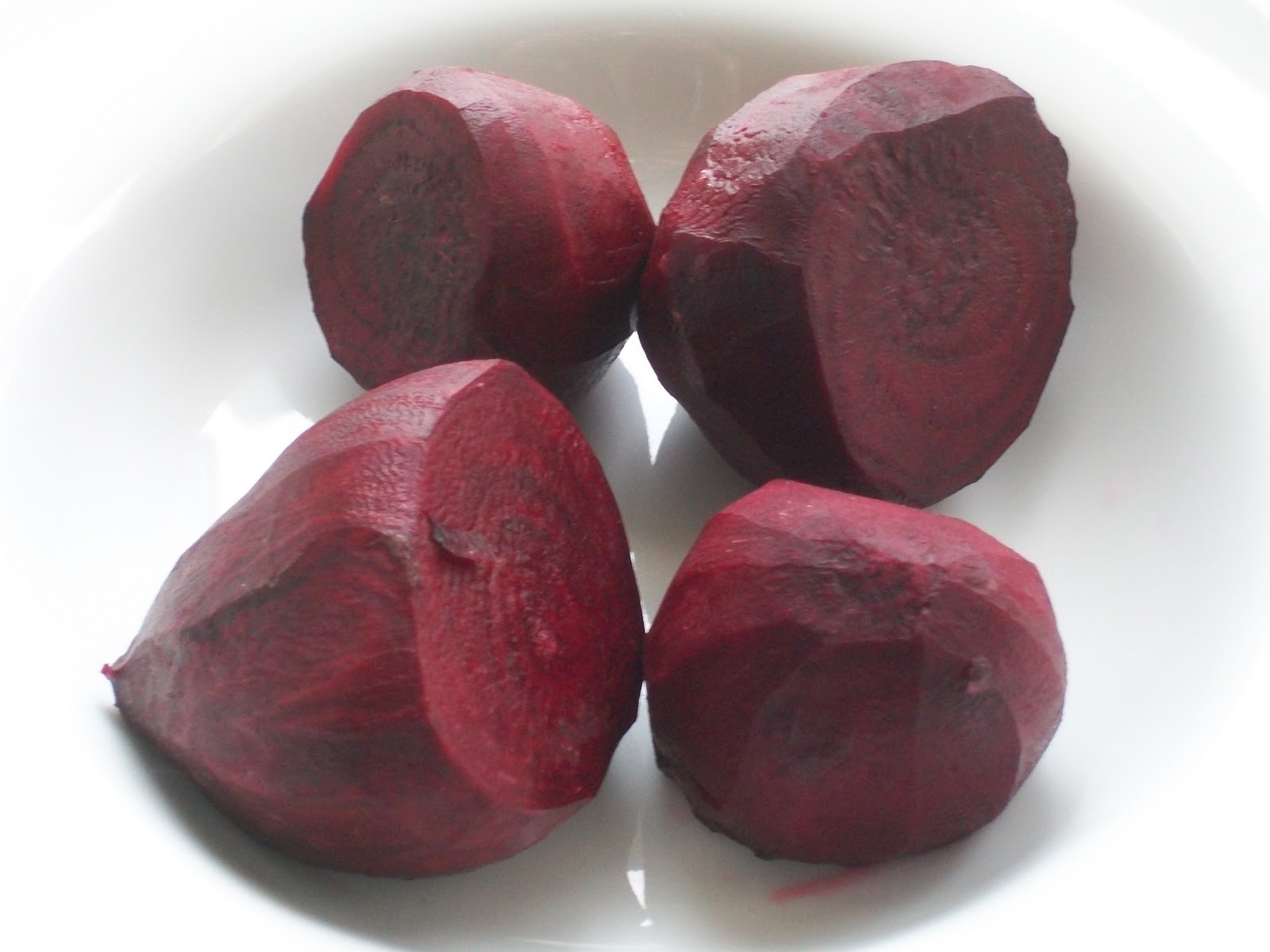
Speaking of simple, flavourful food, this easy peasy dish will make a beet lover out of you.  How can anyone not love beets anyway?  Look how pretty!

Olive oil for drizzling
2 large beets or 4 small ones, peeled and sliced into centimeter thick slices
2 large apples, of a medium acidity variety, peeled and sliced into centimeter thick slices
juice of one lemon
1/4 cup walnuts, coarsely chopped
salt and pepper to taste

Preheat the oven to 400/200 degrees.

Place the beet and apple slices on a large roasting tin or pan.  Drizzle the olive oil and lemon juice over the beets and apples and toss to coat.  Season to taste.

Roast the beets and apples in the oven for about 20 minutes or so, tossing them after 10 minutes.  You can roast them until they are just tender, or a few more minutes until they are a little sticky and chewy.  Toss the walnuts in for the last 5 minutes of roasting.

Serve!

Sunday, 2 October 2011

Ch-Ch-Changes (the Health Edition)

It's that time again, when the leaves turn orange and red, the air gets crisper, and I start to wax poetic about the bounty of the harvest.  Last time around this year, I thought the autumn was a good time to talk about transitioning to vegetarianism.  This time, I'm going to ask you all to put down the donuts, and think about transitioning to a more healthful diet.  Here are some hows and whys.

1.  Swap out your bread

This step comes first partly because it's essential to good health and partly because it's so easy. 20 years ago, dumping white bread for wholemeal might be tricky, but today you almost have to make a commitment to eating white bread to avoid wholemeal.  Supermarkets bread aisles are lined with wholemeal products, and even restaurants; heck, even fast food places will often offer you the option of wholewheat bread or pizza bases. So swap out your daily bread, pizza bases, breadcrumbs, pasta, bread wraps and tortillas, couscous, and pita bread for wholemeal breads and bread products.  And while you're at it, you should also oust white rice and replace it with chewy, nutty brown rice. 

2.  Green your life

Dark, leafy greens are the most healthful foods on the planet.  Nothing else holds a candle.  Kale, spinach, Swiss chard, beet greens, romaine lettuce, watercress, bok choy (pak choi), and collard greens are full of minerals, vitamins, antioxidants, and phytonutrients; in fact, the only thing they don't have a lot of is calories.  What's more, they are super easy to chuck into whatever you happen to be cooking.  Alternatively, you can saute them up with a little garlic and olive oil, or steam them and drizzle them with a simple lemon juice dressing and serve them on the side. Try to eat them every day and feel your body glow with greeny goodness.

34.  Olives are a whole food, oil is not

I know I said that we would talk about the dangers of using cooking oils rather than using the nuts, seeds, and fruits that they are sourced from in a later post, and I really meant it.  But for now, I'll just tell you that there are dangers when using cooking oils rather than using the nuts, seeds, and fruits that they are sourced from, so try not to do it.  In a salad dressing, use nut butters or grind up some nuts or seeds to mix in with the rest of your ingredients.  Saute vegetables in water or vegetable stock (or a combination of no more than one teaspoon of oil and water) and add olives, avocado, nuts or seeds later as a component of the dish.

4.  Don't eschew the cashew

This step is super fun and very delicious.  Dairy is dangerous to your health, but is much beloved, partly for it's creamy manifestations.  Cashews in particular are perfect for making healthy creams that don't involve saturated fat laden dairy.  Try cashew sour cream, cashew cream in replace of creme fraiche, or soft cashew "cheese" spreads instead of cream cheese.  The flavour is not the same as the dairy foods you are used to, but it doesn't need to be.  These creams are delicious, satisfying, and healthful in their own right.

5.  Five a day is a minimum

I know that it's very popular in the media right now to encourage people to aim for five servings of fruits and vegetables a day, but I just think five a day is so weak.  Yeah, most people aren't even reaching that meager goal, but the mediocrity of the masses should not be the ruler with which you use to measure yourself.  Aim for 10 servings a day, and you will certainly reach five.  Try to get a mixture of different kinds of vegetables: leafy greens, cruciferous veggies, root vegetables, starchy vegetables, and squashes.  Even better, try to eat as many different colours everyday as you can: dark green broccoli, red tomatoes, orange carrots, purple plums, and white parsnips.  Fans of Rainbow Brite will enjoy this endeavour.

6.  Make sugar a treat

And a treat only.  Eliminate this sneaky fiend from your regular diet. Sugar does absolutely nothing beneficial for your health.  Nothing.  Once or twice a week in a sweet treat, or on special occasions is fine, but cutting it out of your regular meals is essential to health.  Watch out for sugar in your peanut butter, canned tomato sauces, juices, and any and all processed foods. 

7.  Fix breakfast first

Overwhelmed by all the changes you have to make?   Fix one meal at a time, and start with breakfast.  Taking all the simple carbs, saturated and trans fat, animal protein, and dangerous processed additives out of one meal at time allows you to adjust slowly in bite-sized pieces of change.  Why breakfast first?  Well, for one thing, it's the easiest meal to fix, most people are used to eating a simple breakfast.  Secondly, it's the most import...oh, you don't want to hear that again.  Lets just say, try starting your day with a bowl of raisin and walnut porridge with no added sweeteners, and compare how you feel all morning to  how you feel when you start the day with a bowl of frosted flakes with some sugary flavoured yogurt on the side.

8.  Plan for snack attacks

We can all argue till we're blue in the face about the necessity of including snacks in our daily diet, but the bottom line is, at some point your train home is going to be delayed, or your boss is going to forget that he's not the only in the office who eats, or your roommate is going to eat your dinner when you aren't looking (Aga, I'm looking at you).  Keep some fruit (sturdy fruit not prone to juicing inappropriately), trail mix, or whole grain crackers in your bag or briefcase, and you won't storm and pillage the first pizza place you see when unplanned for hunger strikes.

9.  Become additive aware

Since becoming vegan, it's come to my attention that some people are really horrified by the prospect of reading labels to find out what's actually in a food product.  It's not that bad, people.  Get some reading glasses!  Anyhoo, we all need to be on the lookout for unnecessary unhealthful additives like sugar and it's various other names (glucose, dextrose, HFCS, etc), E numbers (i.e. E102), and hydrogenated oils.  Look out for subversive words like flavourings and colouring.  Food should be made up of ingredients that the average person can pronounce and find in their kitchen cupboards.

10.  Start your own nutrition mini-library

More reading, I know.  This one is partly for your own edification, and partly for motivation.  Reading books for nutrition has the obvious benefit of teaching you more about nutrition, but also when you find that you've lost your way and have gone back to chips and soda, you can read these books to remind you of how bad these foods are for your health, and why you made the change in the first place.  C'mon guys, reading nutrition books is fun!

11.  Tell everyone in your life what you are doing

Okay, your postman probably couldn't care less, but let your spouse, partner, roommate, best friends, coworkers, and family members know that you're trying to adopt a healthier diet; otherwise, they may unintentionally sabotage your diet by continually offering foods you shouldn't be eating, but find very hard to resist.  You will have to very specific; telling people that you are eating healthier and expecting them to understand exactly what you mean isn't going to work very well.  Tell them exactly what foods you are eating more of, and what foods you are avoiding.

Now, it may be the case that some people in your life will continued to try and sabotage your new diet even after this point, either because they aren't taking you seriously, or because they resent your new habits.  Sit these people down and tell them exactly why you are making the change.  Did you have a warning from your doctor?  Have you been feeling sluggish and ill?  Does your parent's failing health make you more attentive to your own?  Be direct and honest, and don't be intimidated by any one's attempt to belittle your choices.

12.  Remember that diet really does make a difference

There exists a common misperception that you can't really do much to control your own health; that genetics are the determining factor.  Bull.  Thousands of studies have confirmed that people who eat healthy diets live longer and have lower incidents of disease, and in fact, research suggests that genetics only determine about 2-3% of your total cancer risk.  So why do people from the same families get the same diseases?  Uh, because they eat the same diet?

13.  Consider the cost of an unhealthy diet

Eating an unhealthy diet doesn't just affect you and your life.  It doesn't even just affect your friends and family who have to deal with the emotional repercussions your bad heath, or even your death.  Everyone in your country has to pay for your illness.  Think of the relief on the healthcare system of your country if diabetes, heart disease, obesity, and autoimmune diseases stopped being a major problem.  Large drug companies get rich off of the high prevalence of these diseases and struggling taxpayers shoulder the burden.

14.  Don't get caught in the trap of thinking you have to "give everything good up"

How many times have you heard (or maybe said) some variation of the following statement:  "Sure, if you give up white flour, sugar, meat, cheese, saturated fat, donuts, cheesecake, and alcohol, you might live longer, but who would want to?"  This thought is a trap.  There is plenty of pleasure, even gleeful joy, in healthy eating.  Most healthy eaters I know love food way more than junk food junkies, and their love of food is broader and more adventurous.

Consider this passage from T Colin Cambpell's The China Study:  "Not long ago, one of my best friends suffered a difficult surgery for cancer and spent his last years paralyzed in a nursing home.  During the many visits I made to the nursing home, I never failed to come away with a deep appreciation for the health I still possess in my old age....The enjoyment of life, especially the second half of life, is greatly compromised if we can't see, if we can't think, if our kidneys don't work or if our bones are broken or fragile.  I, for one, hope that I am able to fully enjoy not only the time in the present, but also the time in the future, with good health and independence."  (Campbell 222)

15.  Give yourself time off

Don't worry, no one is expecting you to be a nutritional martyr.  Let yourself have a meal off every now and then.  Feel free to bake you and your friends some treats every other week or so.  Enjoy holidays and the treats that always surround them.  A little bit of most things won't kill you, but if you are ill or overweight aim for no more than 10% of your calories to come from unhealthful foods. 

Vital Vittles

Lunchbox Black Bean Burritos

I created these burritos one day when I was making my lunches for the week and trying to use up various things in my kitchen that looked like that were on their last legs (bad choice of phrase for a vegan burrito?)  Feel free to experiment with throwing different veggies into the mix, and add some guacamole if you are so inclined.

1 cup uncooked brown rice
2 cups water
1/4 cup finely chopped cilantro
juice of one lime
salt and pepper to taste

3 tbsp water
1 tsp olive oil
1 onion, sliced
2 garlic cloves, minced
1 carrot, peeled and grated
1 courgette, grated
1/2 cup corn (frozen, fresh, or canned)
1 can (or 1.5 cups) black beans, drained and rinsed
1 tsp ground cumin
1 tsp ground coriander
1 small green chili, chopped, or a pinch of crushed chili flakes
salt and pepper to taste

3/4 cup raw cashews
2 tbsp lemon juice (or if you want to keep up the lime theme, lime juice)
1/4 cup water
salt to taste

4-6 wholewheat or corn tortillas

For the rice:

In a small, covered pot, bring the rice and water to a bowl and immediately lower to a simmer.  Cook until the rice is tender, about 45-50 minutes.  Once the rice is ready, mix in the cilantro and lime juice.  Taste and add a dash of salt and pepper if you like.

For the cashew sour cream:

Add the cashews, lemon or lime juice and water into a blender (if you only have an immersion or handheld blender, just use a tall container).  Blend until creamy, adding water if necessary. Salt to taste.

For the rice and vegetable mixture:

Heat the oil and water in a large frying pan, and add the onion, sauteing until soft (about 7 minutes.)  Add the garlic, and saute for another minute or so.  Add the cumin, coriander, and chili or chili flakes, and saute for 30 seconds, then add the carrot, courgette, and corn.  Saute the vegetable mixture another 5ish minutes, or until the veggies are soft.  Add the black beans and stir to heat through.  Taste, adjust seasonings.

Heat each tortilla wrap gently in a clean frying pan, just until warm and pliable.   Divide the rice evenly between each tortilla, then top with the veggies and bean mixture, then top with cashew cream (and guacamole, if you want).  Wrap and serve immediately.

Saturday, 27 August 2011

Is a Vegan Diet too Expensive?

“I would eat vegetarian more often, but vegetables are so expensive.” “I can't afford to eat healthy.” “Don't vegan ingredients cost more than normal ones?” Even from vegetarians, I hear these attacks of irrationality: “our grocery bills wouldn’t be so expensive if we weren’t vegetarian,”or “it’s a sad state of affairs that meat is cheaper in this country than vegetables.” Um, no it isn’t. Granted, meat and dairy are subsidized in many countries by the government, which means that meat and dairy are much cheaper than they should be, but they still aren’t cheaper than their vegan alternatives. Stop spreading lies!

I wouldn't have thought that the fact that sources of animal protein tend be amongst the most expensive things on our shopping lists was any big secret.  If I were to make the bold claim that steak is more expensive than brown rice, I don't think I would shock anyone.  So I'm truly baffled when anyone claims that veganism, the base of which is vegetables (any kind you want, they don't have to be fancy), fruits (ditto), grains, beans, nuts, and spices, is more prohibitive in cost than omnivorous diets that use the most expensive items in your grocery store as their staples.  Saying that you would be vegan except that the diet is too expensive is like claiming that you would watch One Tree Hill but you don't think the show takes itself seriously enough.

To demonstrate this claim to those of you who are impudent enough to not just take my word for it, I’m going to compare a typical day of vegan fare to a day of typical omnivore fare. And before you get up in arms claiming that I’ve skewed the results to my own liking, I interviewed two (not one, two!) omnivores about their daily diets as the basis for my omnivore day, and used my own diet for the vegan day.

Although I love to shop at the farmer's market and rarely do my weekly shopping at a big supermarket, for the practical purposes of the post I’ve  used the website http://mysupermarket.co.uk/ to price out the day on Tesco. I’ve generally chosen the cheapest option available, unless it was too budget even for me.

Typical Vegan Day

Breakfast: Porridge with Raisins and Walnuts

Morning Snack: 1 Apple

Lunch: Vegan Caesar Salad and North African Cauliflower Soup

Afternoon snack: 2 Plums

Dinner: Butternut Squash Timbales with Walnuts and Arborio Rice

Total cost of day: £2.70

Typical Meat Eater Day

Breakfast: Cereal with Milk

Morning snack: Banana

Lunch: Ham and Cheese Baguette

Afternoon snack: Individual Sized Yogurt

Dinner: Spaghetti Bolognese

Total cost of day: £4.32


You may notice that my vegan menu does not include so-called substitutes, and most people think these foods are more expensive than their animal alternatives.  But I've drawn up a little comparison to show that most vegan staple substitutes aren't really any more expensive than the cruelty-full items.
For example:
  • In the UK a stick of butter costs £1.60, or 64p per 100g.  A container of Pure vegan butter is £1.57, or 31.4p per 100g
  • A carton of 1.1 litres of cheap milk costs 89p, or 7.8p per 100ml, and a container of cheap soy milk costs 59p, or 5.9p per 100ml
  • Everyone who does eat dairy should only consume organic milk, aside from the ethical considerations, as the added hormones in regular milk are very questionable substances for your health.  From a gastronomic perspective, basic soy milk cannot hold a candle to higher quality soy milk brands, so I've compared the price of a carton of 1.1 litres of organic dairy milk: £1.10, or 9.7p/100ml, to the price of my favourite Alpro Original soy milk: £1.09 per litre, or 10.9p/100ml.
  • A 500g container of Onken yogurt costs 99p, or 19.8p per 100g.  A 500g container of Alpro yogurt costs £1.00, or 20p per 100g
  • While I wouldn't consider cream a basic some people do (especially you cream-loving Brits), so it's worth noting that a 300ml container of Tesco single cream costs £1.00, or 33.3p/100ml, compared to a 250ml container of Alpro soy single cream, which costs 74p, or 29.6p/100ml
You get the idea.  Sometimes a vegan product might cost a little more than the dairy alternative, but often the price is competitive.  The average price per gram/millilitre for the non-vegan items listed above comes out to 26.9p per 100 grams or millilitres.  The average price per gram/millilitre for the vegan items comes out to 19.5p per 100 grams or millilitres.  But of course you know that these processed substitutes shouldn't make up the bulk of your diet.


In my New Year's post, I mentioned that lentils and beans were the cheapest source of protein around.  Beans are not only nutritional powerhouses full of iron, protein, complex carbs, fibre, and micronutrients; they are not only versatile nutritional powerhouses; they are dirt cheap versatile nutritional powerhouses.  Despite all of the attention that soy gets, I think that most vegans consider beans to be their mainstay sources of protein.

Let's compare them to a standard source of comparatively cheap animal protein.  One 1.23Kg package of chicken thighs costs £3.00 or £2.44 per Kg (priced at Tesco).  A 400g can of kidney beans costs 24p, or 60p per kilogram.  Cans of beans are very cheap, but it's even cheaper to buy dried beans and cook them yourself.  While a 500g bag of kidney beans costs 79p, or £1.59 per Kg, in order to properly compare the price of canned and dried beans we must account for the drained weight of the cans and the cooked weight of the dried beans. Isn't this fun?  Would you judge me if I told you that I really think it is fun? 

Since the weight of the drained canned beans is about half the original weight, and the weight of the cooked dried beans is roughly double that of their dried weight, we can estimate this difference fairly accurately simply by doubling the price of the canned beans, and halving the price of the dried beans, meaning that the canned beans cost £1.20 per kilogram and the dried beans cost 76p per kilogram.  So dried beans are even cheaper than canned beans, and both are so much cheaper than the chicken it's silly. Dried beans are only a little more than one quarter of the price of cheap chicken!

I don't think that the perception that vegan foods are more expensive comes from the actual cost of vegetables, fruits, beans and grains, I think it comes from the prices at stores such as Whole Foods Market, Planet Organic, and other uber trendy, organic-esque halls of granola.  I've come to realize that many people believe that doing the bulk of your shopping at these over-priced hippy traps is a requirement for your annual vegan membership.  The uncomfortably well-groomed organic produce sold at Whole Foods et all is no more of a requirement for the vegan diet than it is for the omnivore diet.  Most vegans shop at the same stores that meat-eaters do (unless you do all your shopping at the butcher's), and only visit these shops every once in a while for hard to find specialty items.   

I have to confess, the cheapness of veganity uncovered in this post has amazed even me.  Go forth and buy beans. 

Recessionpe!

Butternut Squash Timbales with Walnuts and Arborio Rice

These little constructions of yum look and taste fancy enough to serve at a dinner party or holiday meal, but I've made them for weeknight suppers without much fuss.  The recipe is adapted only slightly from The Vegan Table.

2 cups of peeled and cubed butternut squash
2.5 cups vegetable stock
1 cup Arborio rice (this is the kind of rice used to make risotto)
1/2 tsp salt
1 large onion, finely chopped
1 clove garlic, minced
2 tbsp fresh parsley (2 tsp dried)
1 tsp fresh thyme
1-2 small sun-dried tomatoes
Black pepper
1/4 cup toasted, chopped walnuts
several leaves of dark greens such as kale or collard greens (about 2 per person)

Lightly oil 4 ramekins, mini-loaf pans, or smallish sized cereal bowls.  Note: this step is optional.  If you are making this dish for a weekday meal and aren't too fussed about presentation, you can just serve everything in a big old mess on a plate.

Steam or bake squash until just tender, about 10-12 minutes for steaming, 30 minutes for baking.

Bring stock and rice to a boil in a large saucepan.  Add salt, and reduce heat to low, cover and cook about 20 minutes, stirring often (the rice should ideally be tender with some liquid remaining).  Uncover, give a good stir, and take off heat.

In the meantime, toast the walnuts in a single layer on a small baking pan in the oven for about 5 minutes, or until fragrant.  Saute the greens in either water or a little olive oil in a frying pan.

Heat oil or water in a large frying pan over medium-high heat.  Saute onion until translucent and just browning.  Add garlic, parsley, and thyme, and stir for a few minutes.  Add the sun dried tomatoes and squash.  Remove from heat.
 
If serving in a big mess, simply arrange the greens on each plate, top with rice, then squash mixture, and then sprinkle with walnuts.

If serving fancy-like, place a quarter of the squash mixture in each ramekin/bowl, and press down to pack.  Top with 1/4 of the rice mixture, and press down firmly again.  Arrange the sauteed greens on each plate, and turn over each bowl/ramekin onto the bed of greens.  If the timbale doesn't come out on its own, gently run a knife around the edge to dislodge it.  Reshape carefully if needed.  Sprinkle with walnuts and black pepper to taste.

Sunday, 10 July 2011

I buy free-range eggs. So there's no problem, right?

A Wild Chicken
Despite having eaten plenty of them in my lifetime, I've always found eggs a little disturbing.  I mean, think about what an egg is, and think about what the human equivalent might be, and then think about eating that human equivalent.  Now do you feel like eating frittata tonight?  But I continued to eat eggs, partly out of habit and convenience, and partly because I couldn't really see a reason not to eat them.

Well, I've found some reasons.

Most of you probably already know what's wrong with battery farm eggs.  We've seen the images of the tiny cages, the dark, dismal barns, and the crowds of birds smothering each other, often resulting in injury and death.  We all know that in these systems, injured birds often go unnoticed, and are left to die a slow death while being trampled on by other birds.  We all know that sometimes the corpses of these birds are not removed quickly, disturbing and distressing the other birds, and spreading disease.

We all know that a hen living in one of the cramped cages will often suffer from osteoporosis, broken bones, and sores on her body.  We know that, despite being a very social animal, she will be cut off from any contact with other birds.  We know that the feces from other birds will drop down on her constantly.  We know that she will never see daylight.

You all ready have all of this information, so I didn't need to tell you. When I first saw the images of caged hens, I did the same thing a lot of other people did.  I felt a wave of guilt, and started buying free range eggs instead. I thought the problem was largely solved.  Was it?  Is there a problem with free-range eggs?

Well, for starters, although hens would normally live more than 10 years, in the egg-laying industry they are considered spent (a charming expression) after 1-2 years, and are sent to die an unimaginably cruel death in a slaughterhouse.  Just as with the dairy industry, the egg industry props up the meat industry, and anyone who has a problem with the meat industry must qualifying have a problem with the egg industry.

Unbeknownst to many, the free-range label also doesn't mean a heck of a lot.  In the USA, in order to label their eggs free-range, a farm simply has to open a window or a door for some part of the day.  The cramped conditions can remain the same, the unbearable temperatures can remain the same, everything else stays the same.  Does anyone really think that the hens care or even notice whether or not a window is open?  In Canada, there is no regulation whatsoever on what gets labelled free-range.

In the UK, regulations are a little stricter, but the living (and dying) conditions for these birds are still a cruel joke.  Under UK law, free-range birds supposedly have access to the outside throughout the day, and under European Union law, each bird must have 4 square metres of space in the open-air range.  Inside the barn, hens may be "stocked" (another charming expression) at a density of 9 hens per square metre.

In free-range systems, there are several factors that make regulations ineffective. The first of these factors should be obvious: farmers don't always do what they are told.  Undercover investigations have shown farms that proudly proclaim the term free-range, or even Freedom Food stamps from the RSPCA, blatantly disregarding the rules of these terms, keeping the birds in cramped conditions, failing to remove the corpses of dead birds, and allowing injury and disease to run rampant.  

Undercover operations have taken video footage of some of these farms, and some of that footage is available for you to see.  The UK group Viva! and Sky News have done an expose on a free range farm here.  Five News has done an expose on a free range farm in Norfolk that can be found here, and the sanctuary Peaceful Prairie has done a video on free-range farming in the US that can be found here.

A Wild Hen and Her Chicks
Although chickens are social animals, the flocks that farms keep them in are unnaturally large, and large flocks result in aggression in some of the birds.  Aggressive birds will often guard the opening to the open air range, stopping other birds from getting outside, and keeping them in the cramped conditions indoors.  As a consequence, many of the birds will rarely, if ever, see the outdoors.

Another consequence of aggression in these birds is a tendency towards pecking, which is not as cute as it sounds.  Aggressive birds will give other hens sores and defeather them by pecking at them.  They may also engage in cannibalistic behaviour that sometimes causes these birds to wound other birds fatally.  This destructive pecking is stereotypic behaviour that occurs because of the stressful conditions the birds are kept in; it is not natural behaviour.

In order to combat pecking, one of the cruelest practices in chicken egg farming is almost universally used in free range systems.  At a young age, each hen will have her beak seared off with a hot blade.  Hen's beaks have a large nerve supply, and debeaking is a painful process that will often stop a hen from engaging in natural behaviour such as preening, indicating that she feels the pain of the hot blade long after the procedure has been completed.

Rats, mice, and red mite infestations can run rampant in free range systems, causing panic in flocks, often leading to hens been trampled and suffocating to death.  These infestations spread disease, and make the hens stressed, increasing aggressive pecking behaviour.  
 
In our society, baby chicks are admired not only for their fuzzy and adorable appearance, but also as symbols of innocence, youth, and spring fertility.  Most people would agree that to hurt one of these sweet birds would be an act of incredible brutality.  But what happens to these male chicks is perhaps the most shocking aspect of egg farming, and this aspect is something that occurs across the board in every single kind of egg farm: battery farms, free range farms, or organic farms.  Considered useless by the egg-farming industry, each male chick is killed at one to two days old.  Many are killed by being thrown alive into a macerator that grinds them alive.  Many are gassed to death.  Many are killed by being thrown alive into a garbage and left to suffocate.  

If you feel compelled to eliminate eggs from your diet after reading this information, great.  If you feel disturbed by the information, but are not ready to completely stop eating eggs, don't bother buying into the clever marketing lie known as free range eggs.  Just eat fewer eggs, and keep your mind open to the possibility of an egg-free life.

References
DEFRA, "Code of Recommendations for the Welfare of Livestock: Laying Hens," London: DEFRA, 2002.  http://www.defra.gov.uk/publications/files/pb7274-laying-hens-020717.pdf
DEFRA, "The Welfare of Hens in Free Range Systems," London: DEFRA, 2001. http://www.defra.gov.uk/publications/files/pb7274-laying-hens-020717.pdf
Farm Animal Welfare Council, "Report on the Welfare of Laying Hens," London: FAWC, 1997. http://www.fawc.org.uk/reports/layhens/lhgretoc.htm
The Vegan Society, "Hens and Eggs," Birmingham: The Vegan Society, accessed July 2011.   
http://www.vegansociety.com/resources/animals/hens-and-eggs.aspx.
United Poultry Concerns, "Chickens," Machipongo: UPC, accessed July 2011.  http://www.upc-online.org/chickens/chickensbro.html